Genetic health
She bought the test to find out his breed. The same report told her he would go blind.
A dog DNA test gets bought for the breed reveal. The health screen attached to it is the half that changes what your vet does next.
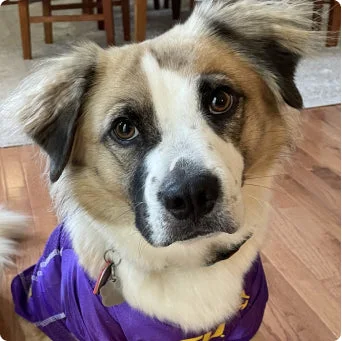
Everybody asks. At the park, at the vet, in the elevator. What is he? And you give the answer you have always given. Lab, probably. Some shepherd. Something else in there.
Jane Flanders Salazar gave that answer about Diego for two years. She and her husband had pulled him out of a shelter and they were curious, so around his second birthday they bought an Embark test to settle it.
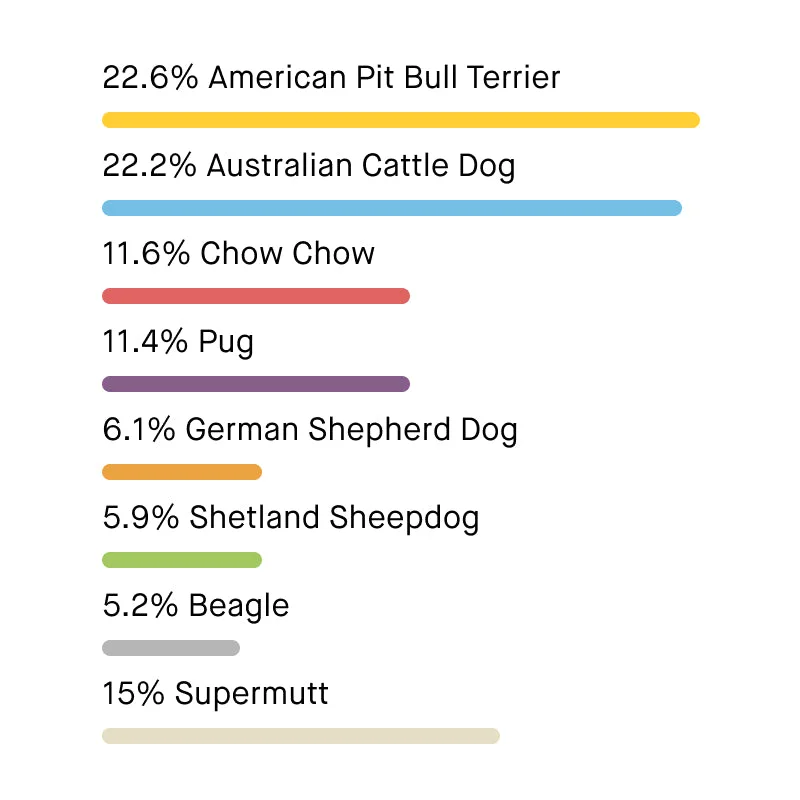
The breed answer came back in eight pieces. American Pit Bull Terrier and Australian Cattle Dog, almost exactly tied at the top. Chow Chow. Pug. A little German Shepherd, a little Shetland Sheepdog, a little Beagle. Fifteen percent that the reference database could only call Supermutt.
Then there was the other page. Diego had inherited two copies of a variant called PRCD. Two copies means progressive retinal atrophy: painless, progressive vision loss, night vision first, then daylight, both eyes. A veterinary ophthalmologist confirmed it and put a number on it. Diego would most likely be blind by the time he turned five.
Part 01
The reveal is the half everyone buys. The other half is the half that does something.
There is no treatment for PRA. Knowing did not save Diego’s eyes, and it is worth being blunt about that, because it is exactly what most people assume a genetic result is for.
What it bought was three years of preparation instead of a surprise. Night lights near the stairs. Furniture that stays where it is. Training built on verbal commands rather than hand signals, taught while he could still see the hands. And the recommendation the ophthalmologist made that nobody would have thought to make otherwise: get him a companion dog now, while he can still learn the house alongside someone.
So Jane went back to the shelters and found Dixie. That decision has its own ending, and we will get to it, because it is the strangest part of the story.
The answer she paid for
Eight breeds, and a very good evening
Pit Bull Terrier, Cattle Dog, Chow Chow, Pug, Shepherd, Sheepdog, Beagle, Supermutt.
The answer that came with it
Two copies of PRCD, and three years of warning
Night lights, furniture that does not move, verbal cues taught early, a companion dog.
What actually arrives
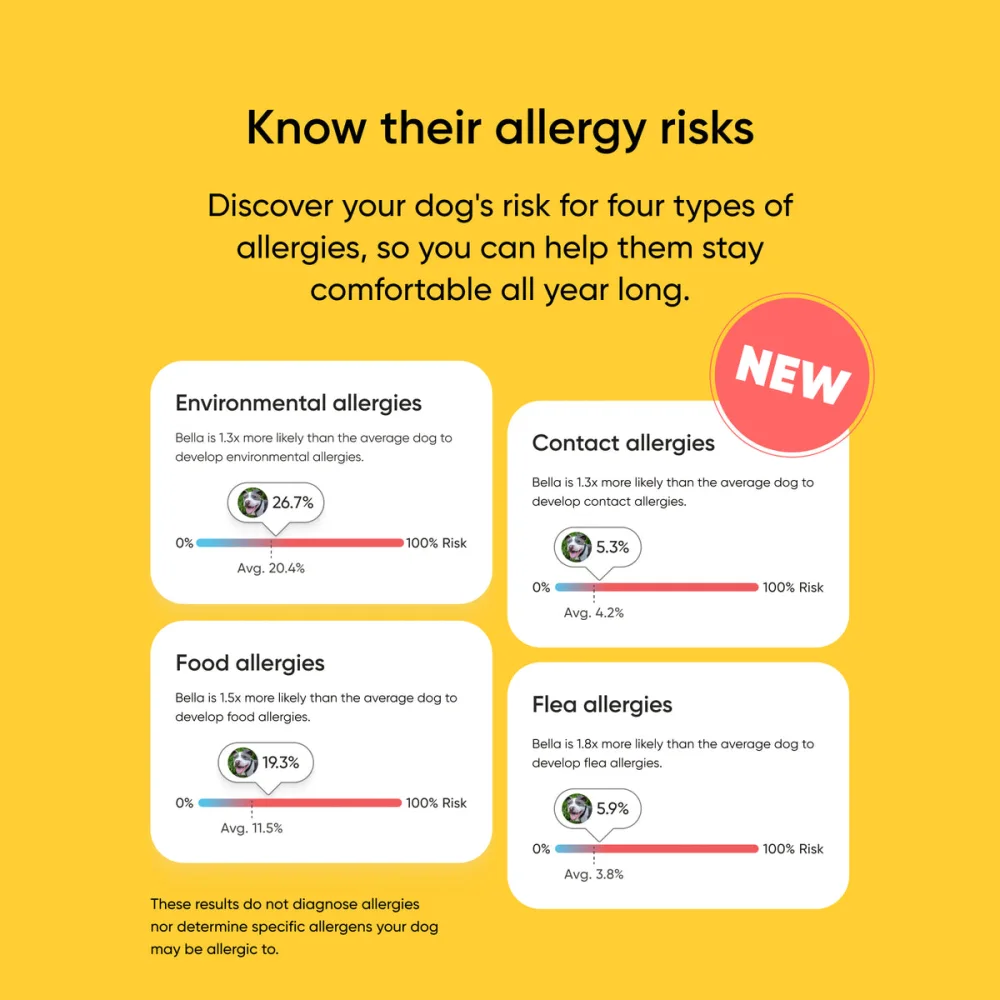
The Breed + Health test is one cheek swab that returns two reports at once. Embark’s own product page lists what is in the envelope: breed mix, ancestry, relatives, family tree, health conditions, coat color and traits, predicted weight, genetic COI and allergy risk scores.
Almost every ad you have seen for this category sells the first item on that list. The rest of this page is about the fifth one.
Part 02
What the health half is actually reading
Embark publishes the full list. It is not a headline number you have to take on faith, it is a browsable index of every condition on the panel, filed by body system, and you can count it yourself.
So we counted it. On August 13, 2026, the filter on their conditions list reported 273 conditions across seventeen systems. Here is the shape of it, which nobody ever draws.
Where the 273 conditions sit
Number of screened conditions per body system, counted from Embark’s published health conditions list.
Counted from the category filter on embarkvet.com/health-conditions-list, August 13, 2026. Embark markets the panel as 270+ conditions. Note the two smallest bars. The four conditions filed under Clinical are the ones your vet can act on the same afternoon.
Part 03
The one result that changes what your vet does tomorrow
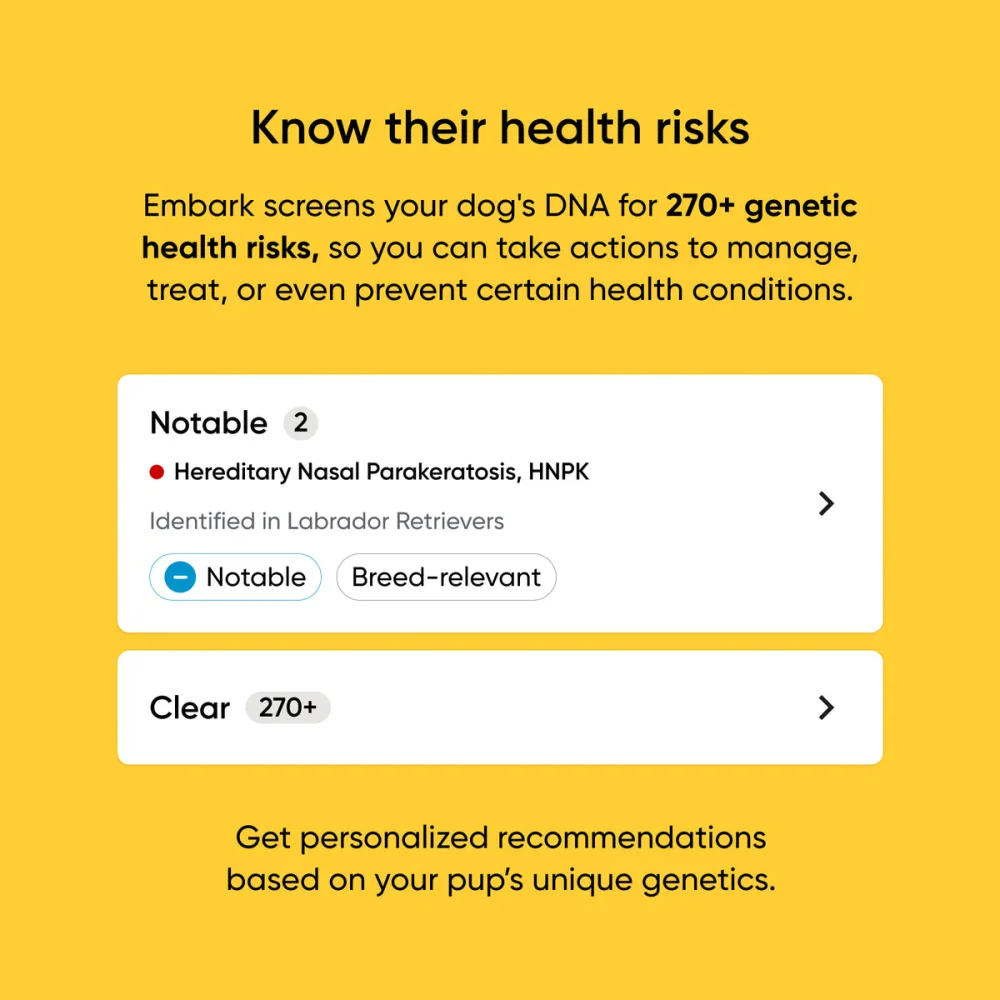
Of those 273 conditions, most are things to watch for over years. One of them is a thing to know before your dog is handed a pill.
It sits at the top of the Clinical category and it is called MDR1 Drug Sensitivity. Embark’s description of it is one paragraph long and worth reading slowly:
Dewormers and anti-diarrheals are not exotic. They are the two most ordinary things in a small animal practice. A dog with this variant looks completely normal until the day something routine is prescribed, and the file that would have flagged it is a file nobody ordered.
Without the result
Standard dose, standard drug
The dog looks like any other dog. Nothing in the exam suggests otherwise.
With the result
One line in the chart, before the script is written
Embark’s own instruction: make sure your vet knows before prescribing.
That is the whole argument for the health half, compressed into one gene. The breed pie chart is a great evening. This is a line item in a medical record.
Part 04
The results nobody puts in an ad: the ones that come back clean
Haniff arrived at One Tail at a Time in Chicago as a stray, with rapid involuntary muscle movements in his hind legs. The condition has a name, myoclonus, and a long list of frightening possible causes behind it. His neurologist asked for the Embark health screening to help decide what to do next.
His breed answer was its own surprise: 43.6% American Eskimo Dog, 35.9% Boston Terrier, 6.2% Pomeranian, with Supermutt ancestry that likely carried traces of Chow Chow, Cocker Spaniel and Beagle. But the part that mattered to the rescue was what the panel did not find.
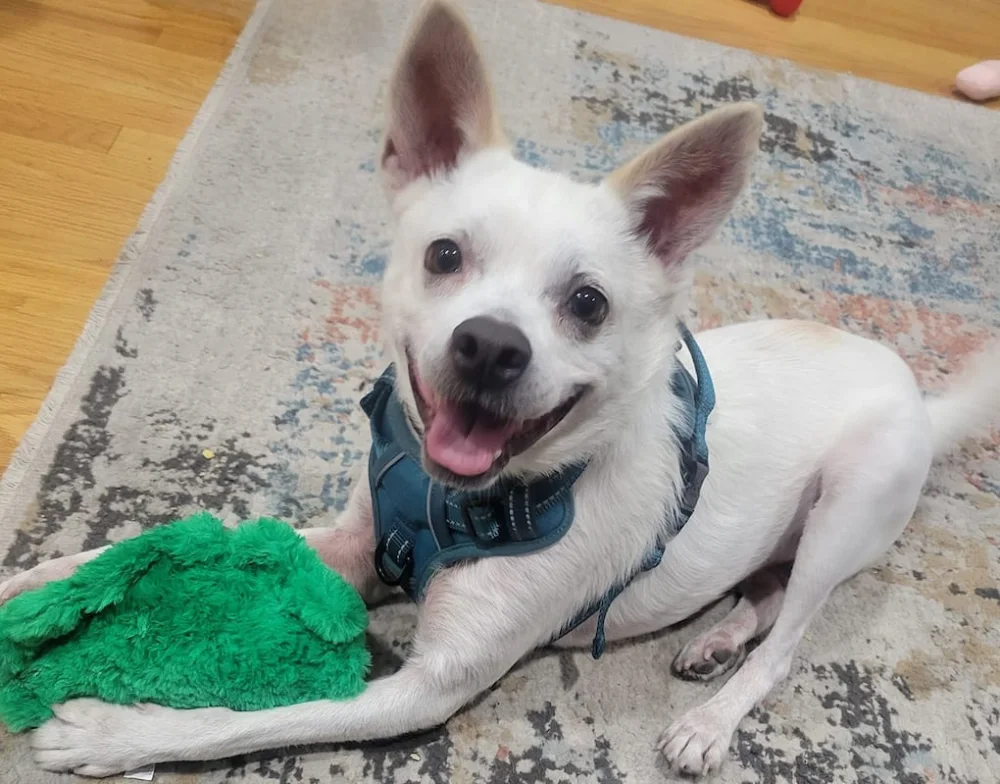
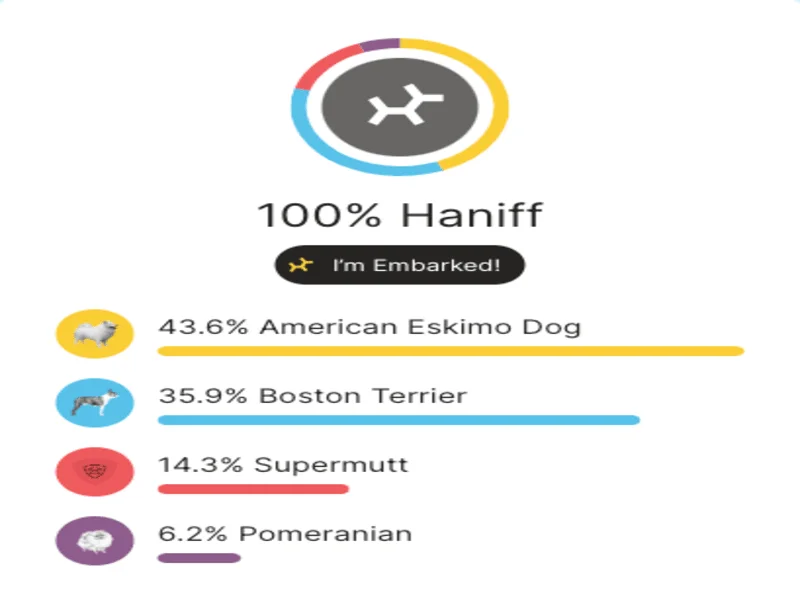
A clean screen is not a guarantee of anything, and Dr. Wooten does not claim it is. She says the conditions became less likely. But less likely was enough to cancel a round of invasive diagnostics on a shelter dog and spend the money on other animals. That is a result doing work, and it will never be the picture on a billboard.
Part 05
Your guess about the breed is probably wrong, and that is not an insult
The rescue that tested Haniff put it plainly.
The reason is boring and mechanical. Every puppy gets a shuffled deck, so two dogs from the same parents can inherit very different halves of the same ancestry. Coat, ears and size are a handful of genes out of the whole genome, and they are the only genes your eyes can read. Everything else, including every condition on that panel of 273, is invisible from across a room.
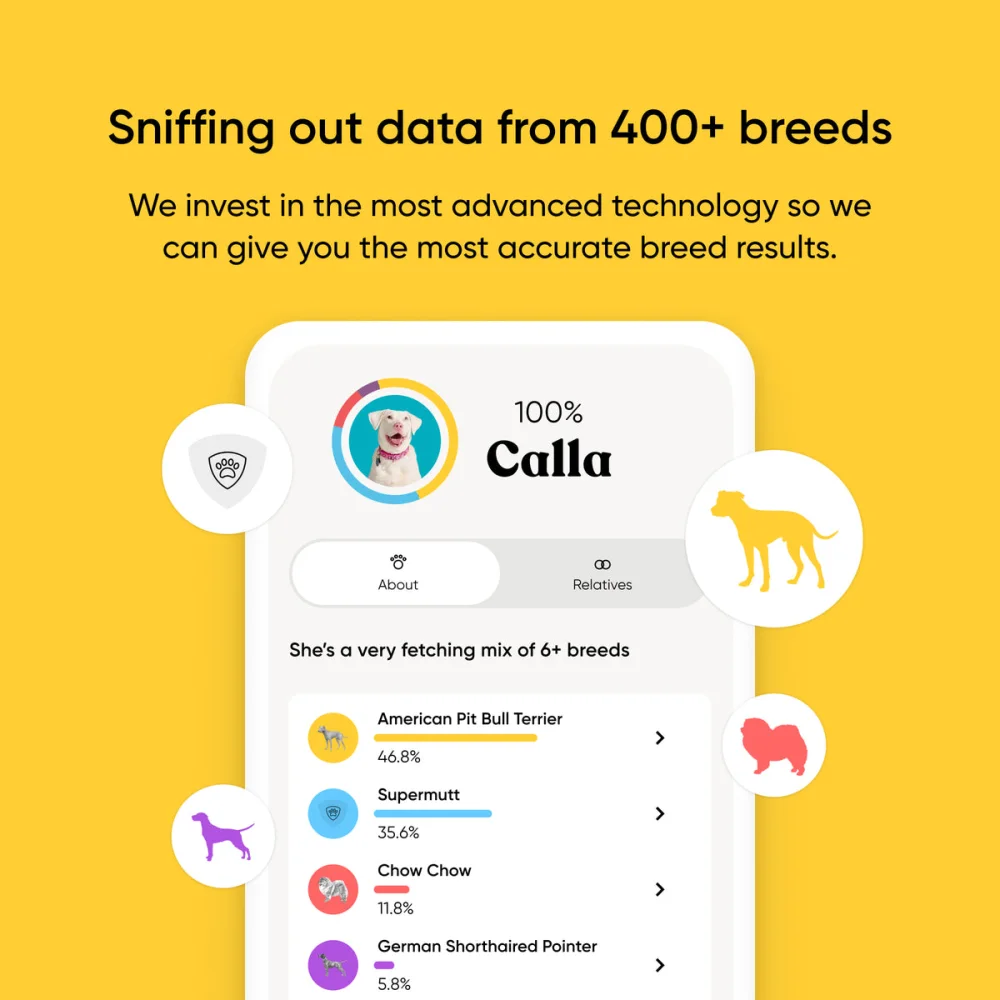
Which is why the breed answer runs to 400 or more breeds and varieties, including Village Dogs, the free breeding populations that most reference databases simply have no name for, and why a chunk of many results comes back labeled Supermutt rather than pretending to a precision it does not have.
Part 06
What is happening to the swab while you wait
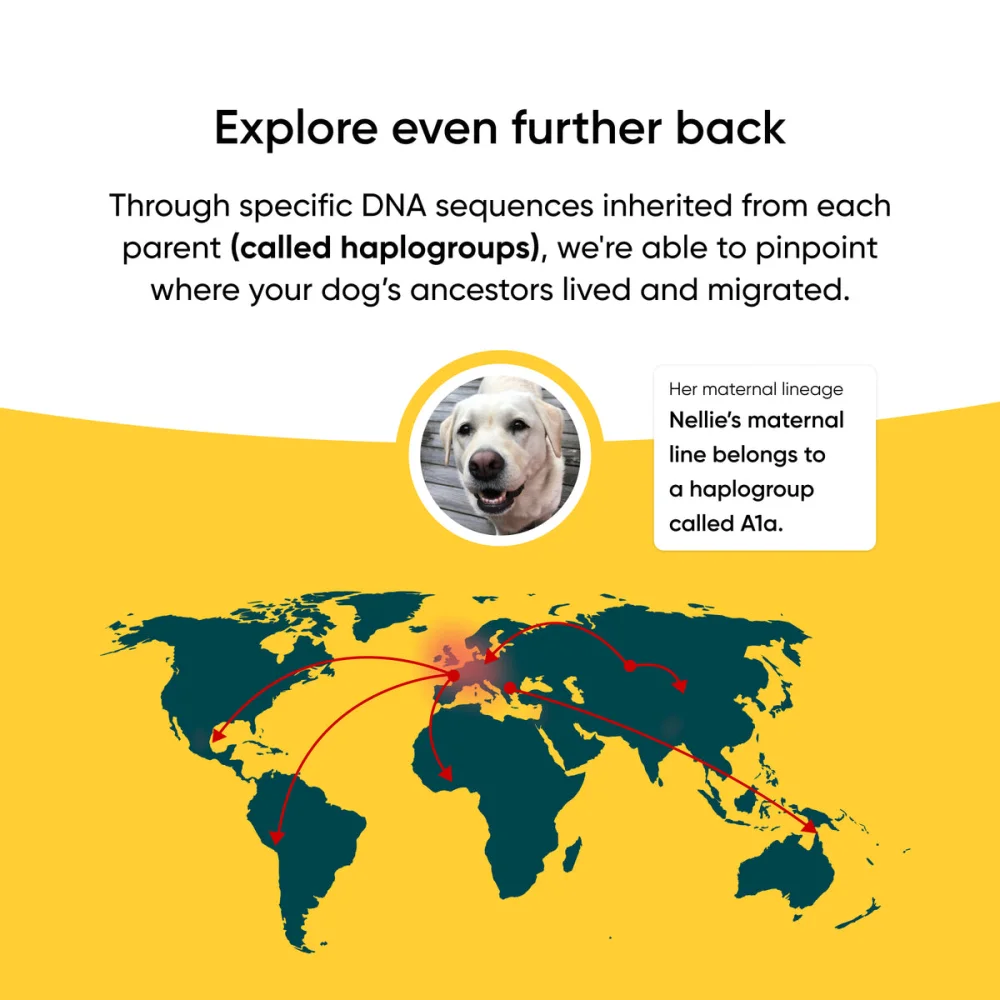
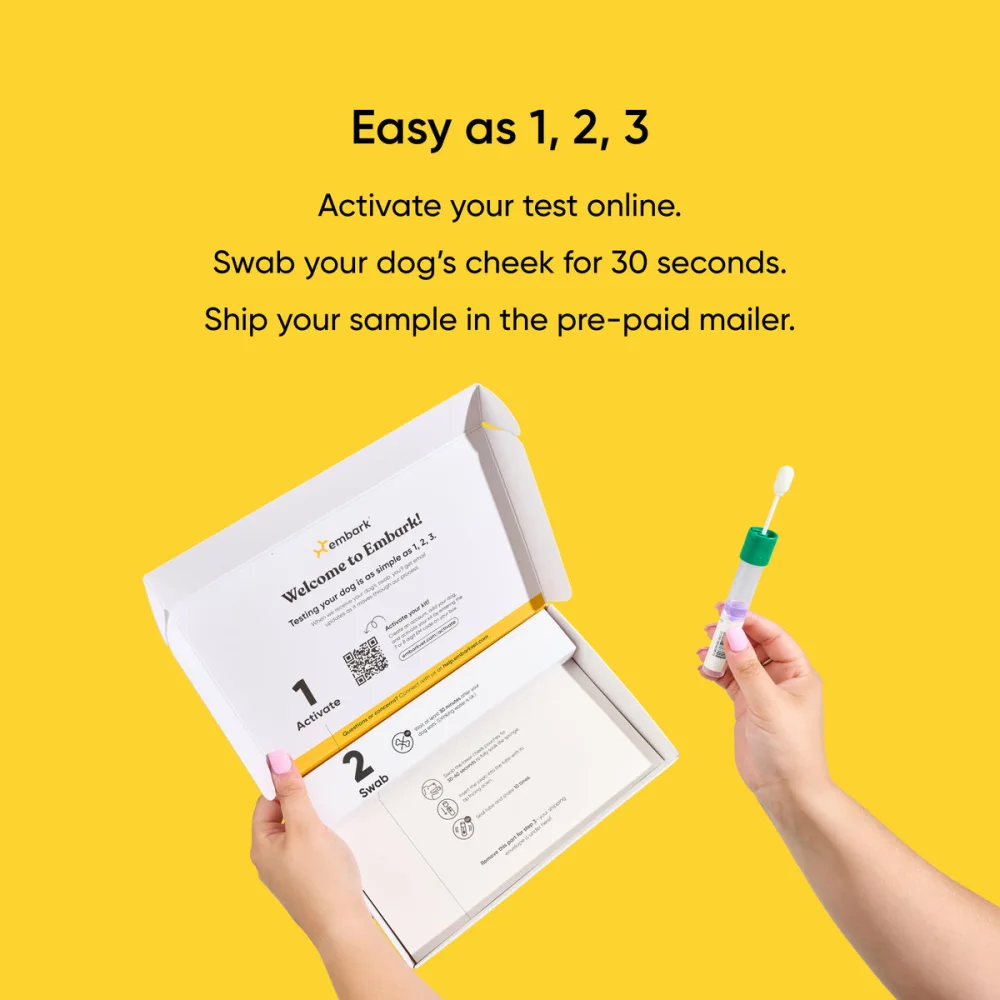
Three weeks is a long time to wait for a bar chart, and Embark has published what fills them. It is worth knowing, because the method is the reason the health half exists at all.
From cheek to percentage
Drawn from Embark’s published explainer, How Do Dog DNA Tests Work. The array itself is a custom SNP microarray developed with Cornell University College of Veterinary Medicine, and every health condition is tested with more than one probe.
Two consequences fall out of that method, and both are easy to miss.
- The breed answer is a comparison, not a lookup. Your dog is scored against reference genomes, which is why a result can be updated later as the database grows and new findings land.
- The health answer is nearly free to produce. The same slide that reads the breed markers reads the disease markers. That is why one swab returns both reports, and why buying only the breed half is the odd choice rather than the safe one.
Figures published by Embark on the Breed + Health product page and the health conditions list, read on August 13, 2026.
See the Breed + Health testBoth reports from one swab. $139 today, regular price $199.Part 07
And then the test found Diego a sister
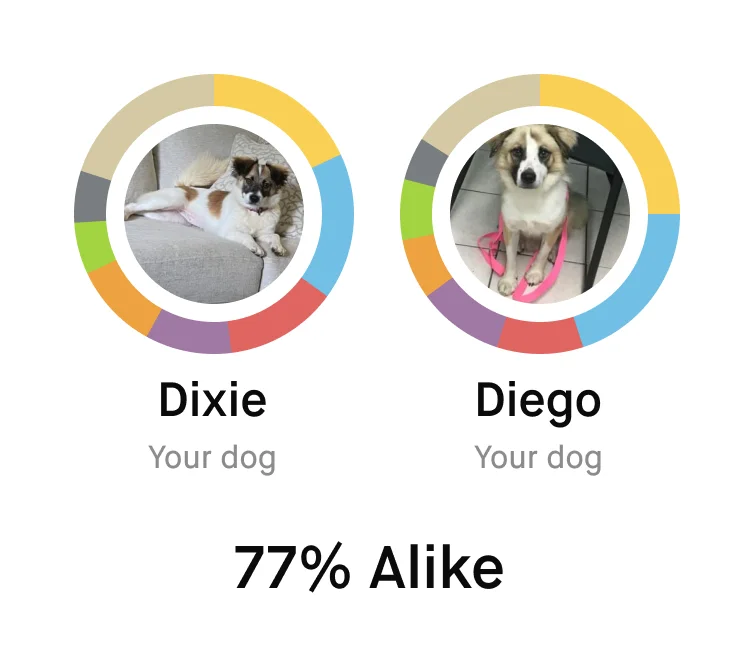
Jane tested Dixie too, the companion dog she had adopted so that Diego would not face his blindness alone. She was expecting a breed breakdown.
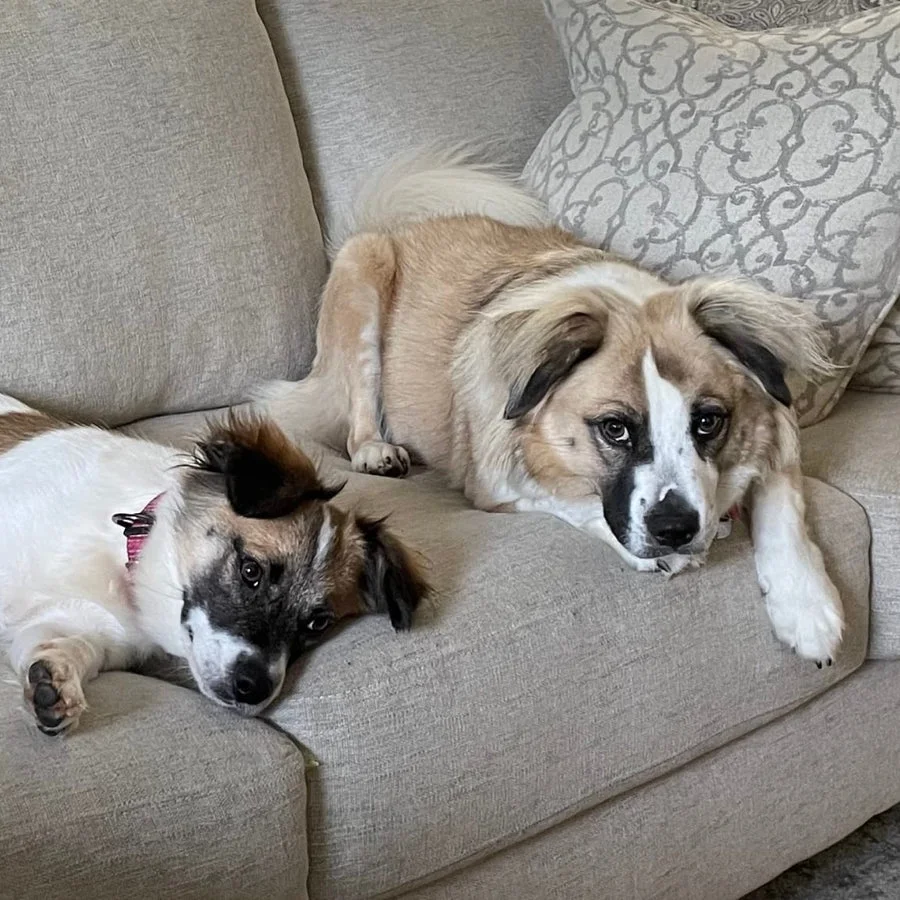
What came back was Relative Finder telling her that Dixie and Diego are full siblings. Same parents, different litters, adopted years apart from different shelters by a woman who had simply thought they looked alike.
Dixie’s health page did not repeat Diego’s. She does not carry his PRCD risk. She carries two copies of a different variant, one linked to a higher risk of intervertebral disc disease, which turns into an ordinary list of house rules: less jumping off high furniture, keep her weight where it should be, and if her back ever bothers her, say the word IVDD to the vet on day one instead of week three.
Two dogs. Same parents. Same house. Completely different pages.
Part 08
What a risk result does not mean
This is the part that keeps a page like this honest, and Embark writes it out themselves rather than burying it.
Carrying a variant is not the same as having the disease. The scientific word is penetrance: the same mutation can be very likely to cause a condition in one breed and rarely cause it in another, and it can vary between dogs inside a single breed. Embark’s own guidance is that a risk result is an indicator of something to look out for, that you should take it to your veterinarian and build a plan together, and that you can also talk it through with an Embark support specialist or veterinary geneticist.
Read it the other way and the value gets clearer. Diego’s result was not a prediction that came true because a report said so. It was three years of warning about something that was going to happen anyway.
Part 09
What it costs, and what the cheaper one leaves out
There are two versions of the same swab. The difference between them is the entire subject of this page.
| What you get | Breed + Health | Breed ID |
|---|---|---|
| Price today | $139 regular $199 | $109 regular $129 |
| Breed breakdown, 400+ breeds | Yes | Yes |
| Geographic ancestry | Yes | Yes |
| Relative finder | Yes | Yes |
| Health screening, 270+ conditions | Yes | No |
| Allergy risk scores | Yes | No |
| Predicted weight | Yes | No |
| Physical traits | Yes | No |
| Genetic diversity | Yes | No |
Reproduced from the comparison table published on Embark’s Breed + Health product page, August 13, 2026.
Thirty dollars separates a very good evening from a file your veterinarian can use. That is the actual decision on the table, and it is the reason the health version is the one worth pointing at.
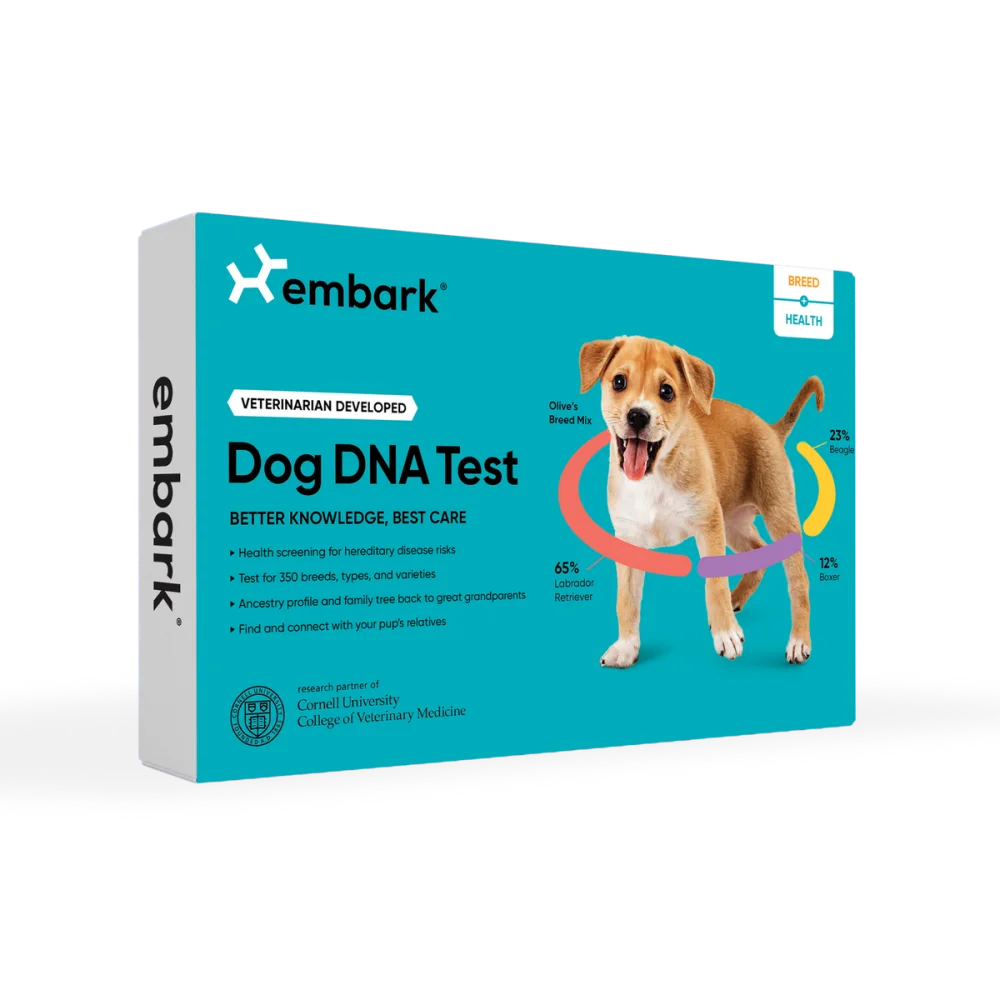
- 270+ genetic health risks screened, including MDR1 drug sensitivity
- 400+ breeds and varieties, including Village Dogs, plus 55 traits
- Allergy risk scores, predicted weight, coat color and traits, genetic COI
- Relative finder and family tree, the feature that found Diego his sister
- Custom SNP microarray developed with Cornell University College of Veterinary Medicine, 99% breed ancestry accuracy
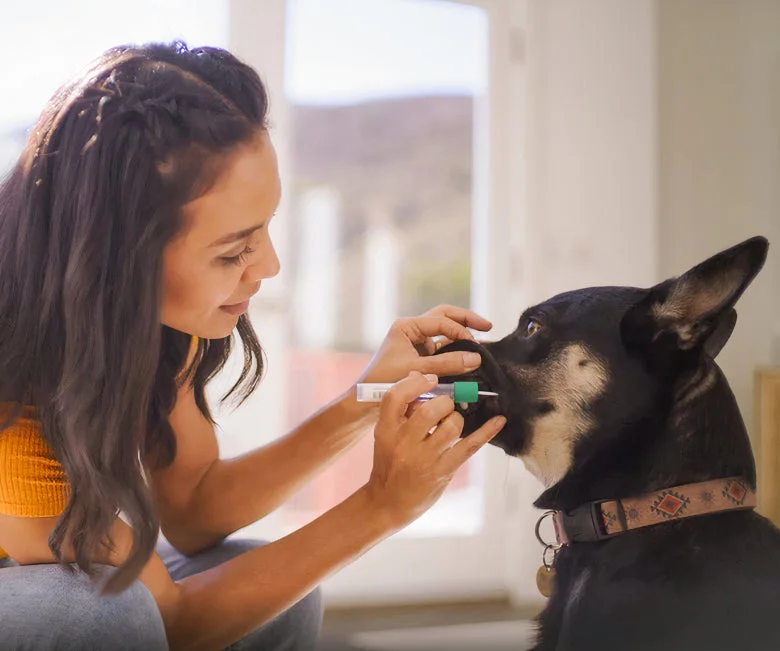
- Swab for 30 seconds, mail it in the prepaid envelope, results in 2 to 4 weeks
- Free US shipping
Part 10
What owners say once the results land
18,992 ratings, as published
The full distribution on the Breed + Health product page, not the average on its own.
Overall 4.7 out of 5. One star is the third largest bucket, ahead of both three and two stars. Bars are drawn on a compressed scale so the small counts stay readable.
My pup is a senior and I so wish I would have done this sooner. The fun was finding out all the different breeds that made my Oakley perfect. It validated his PRA diagnosis and will make me look out for the potential of other health issues.
Julissa S.Verified buyer
One of my dogs has a hereditary issue. Embark notified me immediately before completing the rest of the tests. I took Allie to the vet, unknown health issues were fixed and she is now on preventative treatment (prescription dog food). So grateful!
Vicky Y.Verified buyer
Found out that my girl should have a low end of normal ALT reading on bloodwork. Would have never know otherwise.
Laura J.
We have been able to tailor Bandit’s training and exercise regime much better to suit her needs now that we know she is composed of primarily working breeds. Our dog found her passion in scent work and has been much happier since.
Loki K.Verified buyer
We were told we had gotten a lab mix. Seemed to be accurate, but wanted to see what else was in him. 50% lab, 50% various hounds. The hound was a little bit of a surprise, but now that he’s grown a bit you can totally see it.
Amy B.Verified buyer
I got to find one of my Rescues’ Dad and half sister and learn SO much about him. He was a stray and being able to contact the owner of his dad was so enlightening. Absolutely wonderful experience!!
Mandy B.Verified buyer
Reviews published publicly on embarkvet.com and its product pages, read on August 13, 2026. The overall rating there is 4.7 out of 5 across 18,992 reviews, of which 794 are one star.
Part 11
The questions people actually ask first
My dog is nine. Is it too late to be useful?
Late is not the same as pointless. A senior dog has already accumulated symptoms, and a panel that names what he is predisposed to turns a vague worry into a short list to watch. Julissa’s review above is exactly that case: the results validated a diagnosis her dog already had, and told her what else to keep an eye on.
He is a purebred with papers. There is nothing to reveal.
The breed half will not surprise you. The health half is not about breed mix at all: many of the 273 conditions on the panel are named for the exact breeds they run in, and pedigree paperwork does not test for a single one of them. Embark sells a purebred version of the test for that reason.
How long does it take, and can I sit on the kit?
Swab, activate the kit online, mail it in the prepaid envelope, results in two to four weeks. Embark states that samples stay stable for at least six months, but that kits expire two years after purchase.
Will my veterinarian actually care about the result?
Haniff’s neurologist is the one who asked for it. And Embark’s own instruction on MDR1 is written for the exam room: make sure your vet knows before prescribing.
If a risk comes back, does that mean my dog will get it?
No. Penetrance varies by breed and even between dogs of the same breed. Embark is explicit that a variant is an indicator to look out for, not a diagnosis, and that the next step is a conversation with your veterinarian.
One thing worth knowing this month
Through August, Embark is putting the donation added at checkout entirely into its shelter and rescue partners and matching every dollar up to $5,000. The same program, Long Stay, No Longer, is what paid for Buckley’s test: a dog with a wobble who had been waiting 730 days, whose results showed his condition was not genetic and whose adoption conversations changed the week they landed.